The cupboard under the kitchen sink is one of the most-used spaces in the home, yet it can be one of the hardest and most awkward spaces to organise. This small cupboard is quietly creating more stress than you realise, and fixing it is easier than you think.
Organising the cupboard under the kitchen sink.
Have you ever reached under the kitchen sink to grab the bench spray, only to have something tumble out at your feet? You close the door and promise yourself you’ll deal with it later. Half-used cleaning sprays, mystery cloths stuffed into corners, and bottles shoved in around awkward pipes.
The cupboard under the kitchen sink is one of the most-used spaces in the home, yet it often becomes a mess of bottles, sponges, and cloths all thrown together in a jumbled pile. It can also be one of the hardest and most awkward spaces to organise.
The frustrating part? Every time you need something, you waste time searching and feel that tiny flash of annoyance.
Wouldn’t it be great to have an organised space under the kitchen sink so you didn’t have to dig around to find that magic eraser sponge you were looking for? Or never hear your partner shout, “Where do I find the glass cleaner?” again.
This small cupboard is quietly creating more stress than you realise, and fixing it is easier than you think.
I now have an organising system in place that has been working well for many years for my own under-sink storage. Even so, I still need to declutter and reorganise around twice a year to keep things streamlined.
It only takes a few bottles and sponges to be tossed in a hurry to start creating clutter again. Below, I have outlined an easy-to-follow process to create an organised system for the cupboard under your kitchen sink.
Declutter to improve functionality.
The first step in organising the cupboard under the kitchen sink is to declutter without overthinking it. When you remove the excess, you create room for systems that actually work. If your goal is to organise your home with less stress and more ease, starting with less is always the fastest path. Pull everything out so you can see exactly what you own. You can use the floor or kitchen bench to sort your supplies into groups.
Have a bin or rubbish bag handy for disposal of items. Check expiry dates on cleaning products, throw away empty bottles, and recycle duplicates you no longer use. Discard any cleaning cloths and sponges that have seen better days. Be honest about what actually gets used in your weekly routine and let go of products you bought with good intentions but never reach for. Wipe bottles that have had spills, and replace caps.
Create a practical system.
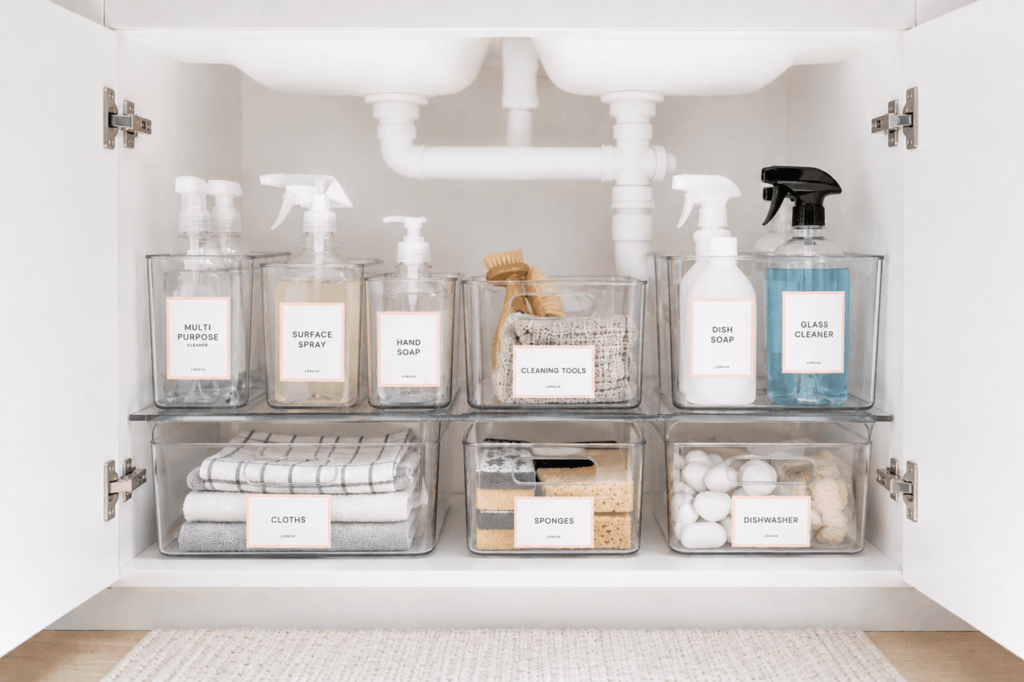
Once you have pared everything back, move on to grouping similar items. Organising under the kitchen sink becomes much easier when every category has a designated home. Gather sprays together, place dishwashing products in one section, keep cloths and sponges together, and store dishwasher tablets or refill supplies separately. I try to group items used in similar areas of the home or for similar purposes. The category groupings you create will depend on what types of cleaners and supplies you use in your home.
Think about the frequency of use and keep everyday items at the front where you can grab them quickly. Reserve harder-to-reach spaces for back-up supplies or items you don’t use as often. Grouping creates visual order and removes decision fatigue because you always know where things belong. This simple habit saves time every day and helps you organise your home in a way that feels calm instead of chaotic.
Wipe the cupboard clean before putting anything back. This one simple reset instantly makes the space feel fresher and easier to manage.
Use clear containers to organise cleaning supplies.
One of the easiest upgrades for organising under the kitchen sink is using clear containers. This is my go-to for storage organisation. Clear storage makes it easy to see what you have at a glance and prevents products from getting lost at the bottom of non-visible containers or spreading across the cupboard.
The other thing I like about clear plastic containers is how easy they are to wipe clean, and they don’t attract mould like bamboo, wood, cloth, or baskets can. I have experienced this first-hand. The very first containers I used were made from bamboo and were continually covered in mould. I’ve had no problems since switching to clear plastic containers.
Choose containers with sides high enough to hold bottles upright but low enough to access easily. The best side height allows removal of spray bottles without pulling the entire container out of the cupboard. Use a handled caddy for products you carry around the house and a small open bin for cloths and sponges.
Creating organised zones under the kitchen sink.
Labels add another layer of simplicity and help every member of the household maintain the system. Clear containers also create a cleaner, more stylish appearance while making it easier to organise your home long term.
The final step in organising under the kitchen sink is arranging everything so the space feels both beautiful and practical.
Place taller bottles at the back and shorter items at the front to create clean sight lines. Use vertical space where possible and leave a little empty room rather than filling every centimetre.
Store matching containers together and keep colours simple to create a calm, cohesive look. A well-organised cupboard should feel effortless to use, not staged or complicated.
The goal is not perfection; it is creating a space where you can instantly find what you need and maintain it in minutes. Once you experience how functional this cupboard can become, you may feel inspired to organise your home one small space at a time.
10 Steps to organising the cupboard under the kitchen sink.
Maximise storage and plan your space.
Before you head to the shops and buy containers, take one final step that makes all the difference: measure your space. One of the biggest mistakes people make when organising the cupboard under the kitchen sink is buying storage first and trying to make it fit later.
Grab a tape measure and write down the width, depth, and height of the usable areas inside the cupboard. Pay close attention to pipes, plumbing connections, and any awkward corners that reduce usable space.
Sketch a simple plan showing where each container will sit. This small amount of planning helps you maximise every centimetre and avoid ending up with containers that waste valuable storage space.
As you create your layout, think beyond single containers and look for ways to layer your storage. Smaller containers placed inside larger containers work beautifully for holding cloths, scrubbers, dishwasher tablets, gloves, and all those little items that tend to disappear into the bottom of containers.
Clear drawer organisers with non-slip pads work well for organising compact spaces. They are the perfect height to hold bottles and cleaning products under the kitchen sink while maintaining accessibility. I’ve included links HERE and HERE to the ones I use in my home.
An organised cupboard feels easy to maintain.
Aim to create zones that support how you actually use the space every day. When organising the cupboard under the kitchen sink, the goal is not to fit in as many products as possible; it is to create a system that feels easy to maintain and effortless to use.
Take your measurements with you and compare them against container dimensions in-store.
A well-planned cupboard saves time, reduces frustration, and turns one of the most awkward spaces in the home into one of the most functional.

Create a beautifully organised home you love.